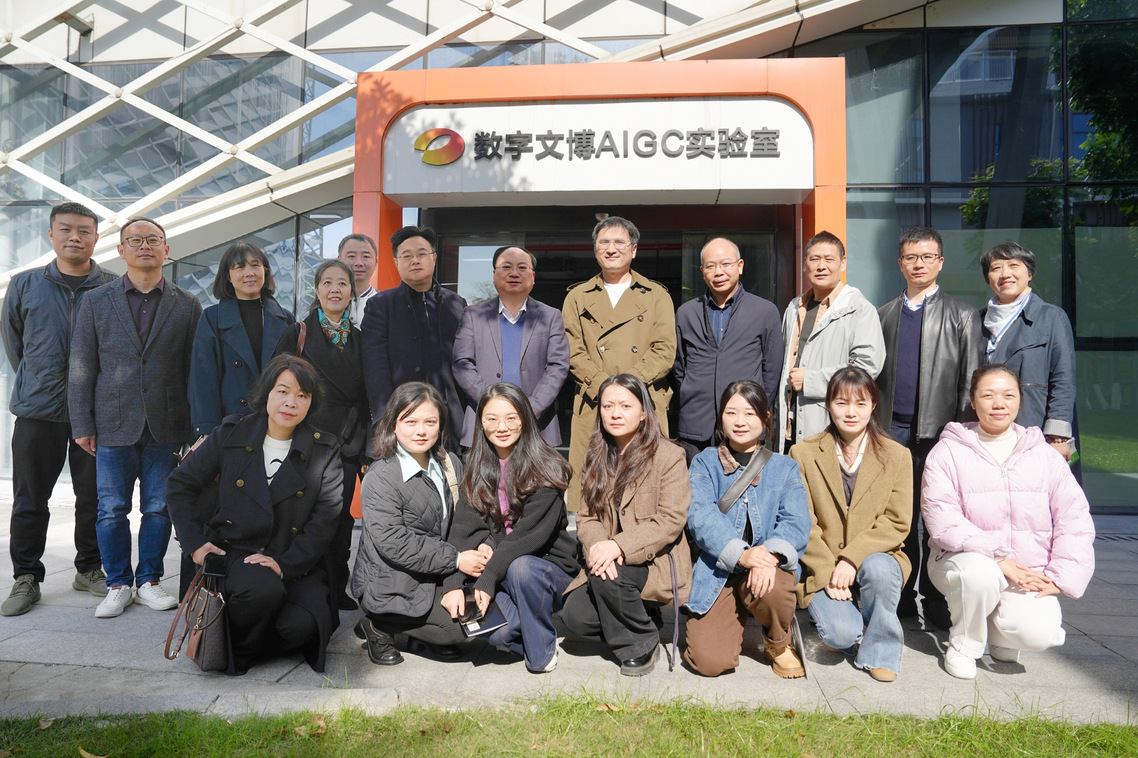
To deepen industry-education integration, expand college-enterprise cooperation, and jointly cultivate high-quality technical and skilled talents that meet the development needs of the media and digital arts industries in the new era, on November 19, HNMMC’s Deputy Secretary of the CPC Committee and President, He Zhanbing, along with Vice President and CPC Committee Member, Shen Jianfei, were invited to visit Hunan Mango Digital Intelligence Art & Technology Co., Ltd. The delegation also included heads from the Party and Government Affairs Office, Enrollment and Employment Office, Propaganda and United Front Work Department, Training Center, and various secondary schools, as well as representatives from the “Double High” Office.
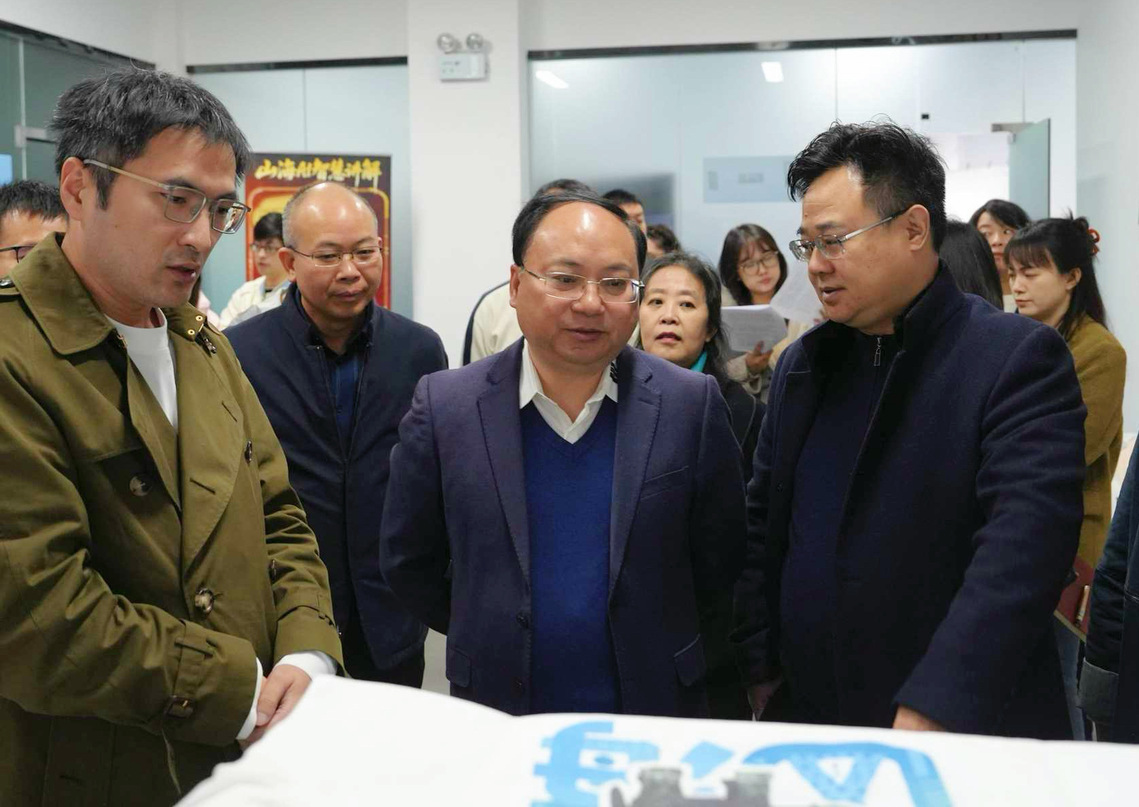
Fang Fei, General Manager of Mango Digital Intelligence, accompanied the delegation on a tour of the company’s digital training room. He provided a detailed introduction to the company’s self-developed "Cultural Relics Neural Core Surface Reconstruction Algorithm", a technology that enables the digital collection and display of cultural relics, improving the efficiency of 3D relics collection, as well as the company’s development of cultural creative products.
He Zhanbing highly recognized Mango Digital Intelligence’s achievements in the interdisciplinary field of digital cultural heritage, digital arts, and intelligent technology. He expressed strong expectations for deeper future cooperation between the two sides in talent development, project co-construction, and other areas. He sincerely invited Mango Digital Intelligence’s technology experts to come to HNMMC for academic exchanges and professional lectures, promoting shared resources and joint talent cultivation between the college and the company.
Shen Jianfei and Fang Fei had in-depth discussions on talent cultivation strategies for the Digital Media Art Design major, exploring new educational models that align with industry development trends.
This research and exchange effectively built a communication platform between the college and the enterprise, laying a solid foundation for future practical cooperation in talent cultivation, digital cultural heritage construction, and the integration of intelligent art technology. It also injected new momentum into promoting college-enterprise collaborative innovation and serving the development of the regional cultural industry.